

How long ago do you think the first ship was built? When humans were still hunter-gatherers? During the Agricultural Revolution? Maybe the dawn of civilization? Well, according to archeological evidence and early cave paintings, the first ship was most likely built when we weren’t even the only human species around – nearly 100,000 years ago – when the Neanderthals and Denisovans still walked among us.

The craft of shipbuilding is one that predated writing and the first civilizations by tens of thousands of years, however it would only be after cities began to form that shipbuilding became standardized and systematized, owing to the need of ships for trade and war rather than purely exploration.
Ancient Dockyards of India
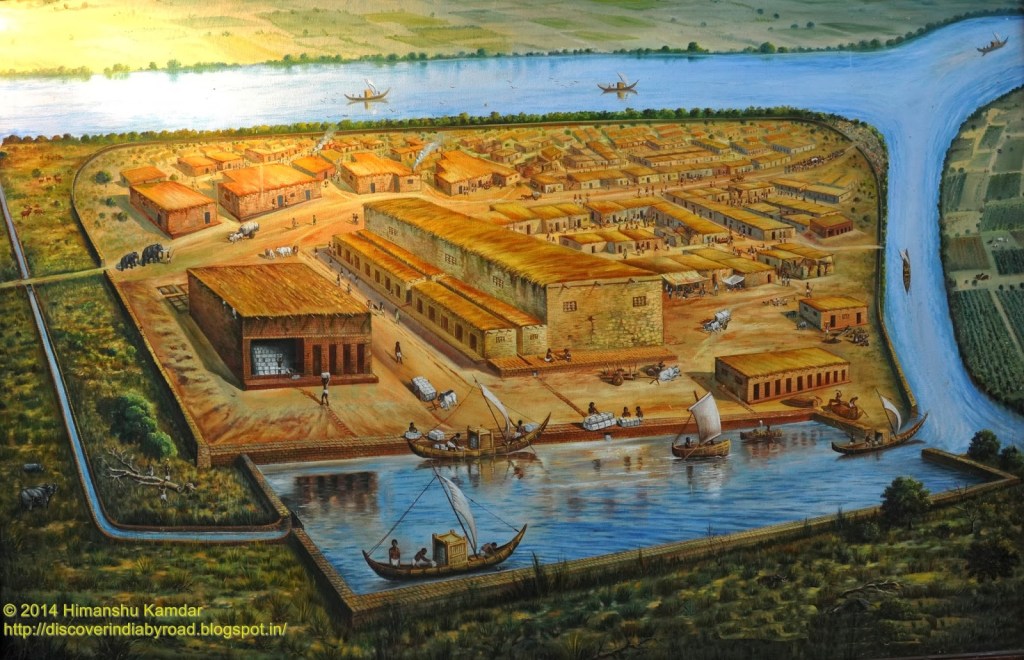
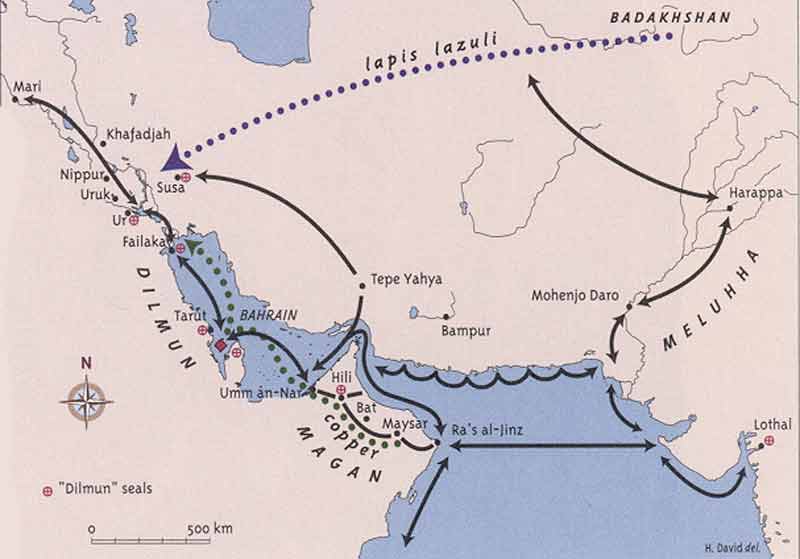
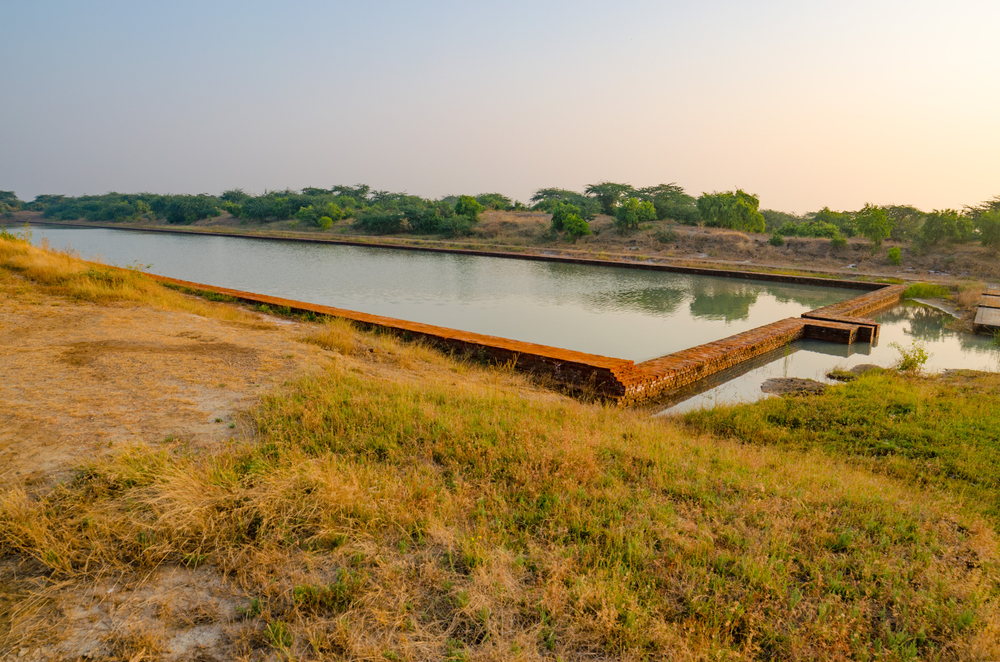
The earliest known dockyard is said to have been constructed at Lothal, a coastal city which was part of the Indus Valley Civilization. It doubled as a port, which was most likely used to trade with other port cities at the time such as Ur of the Sumerian Civilization. It possessed a unique system of a sluice gate which blocked river water from entering its walled complex; ships were built when the land was dry, and during high tides the water would rise above the gate and enter the dockyard, allowing ships to move in and out of the yard.
In the area around Goa, shipyards came into prominence during the Shilahara reign under the Rashtrakuta Dynasty. As mentioned in a previous article, the Shilaharas allowed the West Asian merchants to self-govern Govapuri, and it was here that shipbuilding flourished. The merchants were known as nauvittakas and in fact, most of the merchants got wealthy through the business of shipbuilding and sending these ships out on voyages to various ports along West India and West Asia. This continued even after the Kadambas conquered Govapuri, as this trade was very profitable.
The major port under the Kadambas was located on what is today the Agaçaim Beach, in fact the old port wall is still visible at times during low tides. However, the shipyards were located a short distance away in the village of Neura, known then as Velakula, where the best shipbuilders and sailors of the time lived. Under the Vijayanagaras, the main port once again shifted to the banks of the River Mandovi – the royal port Ribandar (Raya-bandhar or King’s Port).
After being conquered by the Bijapur Sultanate, it shifted to Ella a few kilometers upstream, which grew into the nucleus of Bijapuri and then Bahmani rule in Goa, necessitating the construction of a wall that encompassed the entire modern-day Old Goa along with a few suburbs at its periphery. This had a very interesting effect in that it concentrated all the shipbuilders into a single location, as most of the earlier ports had now been abandoned due to silting of their nearby waterbodies such as the Neura Canal and the sand bar of Agaçaim Beach. A shipyard was built during this time, and it would be this very shipyard that the Portuguese would adopt and restructure as their own for centuries to come.
Cartaz & Portuguese Naval Supremacy in the Indian Ocean
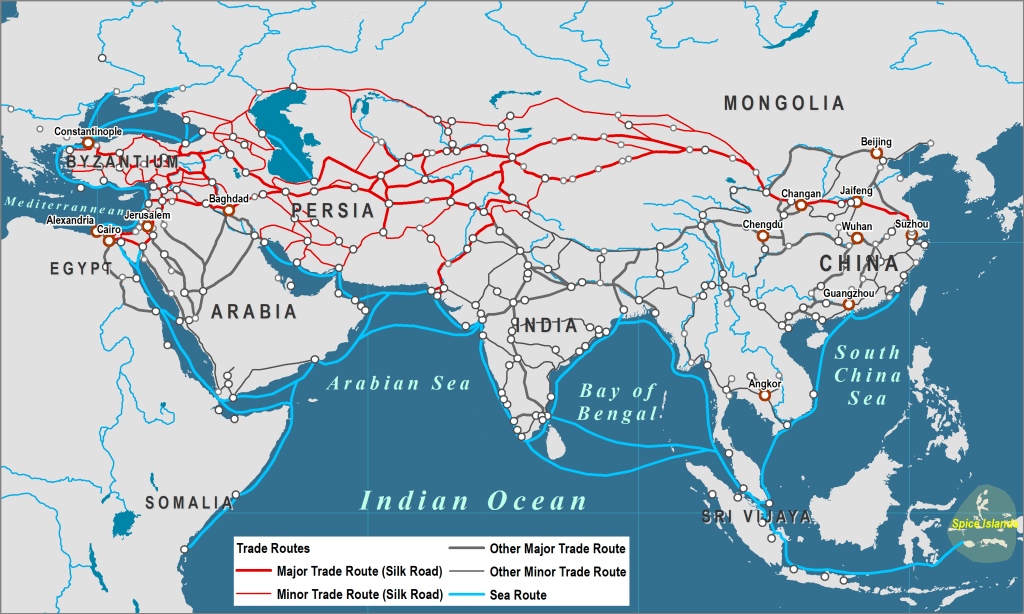
Before describing this principal shipyard and the reason why it was built, it would help to understand the way in which the Portuguese Empire came to dominate the East. You see, when the Portuguese arrived on the scene in the first half of the 16th century, trade had already been booming between the Indian ports and the Ottoman Empire. The Ottomans thus blocked the West European powers from crossing the Silk Road to Asia via Turkey (by claiming exorbitant taxes on whoever wished to cross it), and it was this very fact that led the Western powers to search for a sea route to India and consequently discover the Americas.
Portugal, being at the time a kingdom with very limited manpower and resources compared to its rivals, chose instead to dominate by relying heavily on their naval prowess. Prince Henry the Navigator invested in the building of large shipyards as well as nautical universities such as the famous School of Sagres which taught astronomy, navigation, mapmaking and shipbuilding. It was this naval supremacy that allowed them to conquer the East not through gunpowder alone, but through technology, knowledge of the seas, and a very unique system that took full advantage of the booming trade – a system known as Cartaz.
The Cartaz was a document that was issued by the Portuguese to local & foreign merchant ships that sailed across the Indian Ocean, it was claimed that its purpose was to protect any merchant vessel from attacks by pirates or rival kingdoms; however its true intention was the monopolization of the Spice Route from Bassein to the Moluccas. Not a single ship was allowed to sail without a Cartaz, at the risk of being attacked and destroyed by the Portuguese Armadas themselves. It is thus easy to recognize how such a system would lead to Portuguese domination of the seas; however there was one key shortcoming – they lacked ships.
The Carreira da Índia & The Question of Indian-made Ships
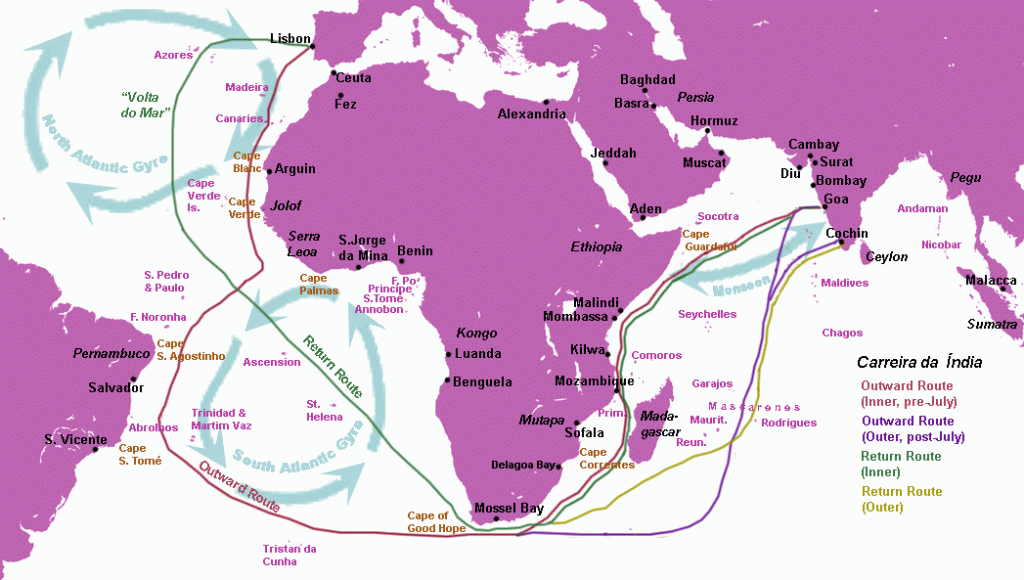
Up until the capture of Goa, the Portuguese depended heavily on the ships sent from Portugal via the Carreira da Índia (or the India Run) which was the route to India around the Cape of Good Hope discovered by Vasco da Gama. This ‘India Run’ took 6 months and was heavily reliant on the monsoon winds; the drawback being that it was common for the ships to never make it to their destination, either due to terrible storms or enemy attacks. It is no surprise then that Afonso de Albuquerque, the admiral who conquered Goa, wrote vehemently to King Manuel I of Portugal about the expertise of the carpenters of Goa, the durability of the teak wood found there and the pre-existence of a shipyard built by the Arabs wherein he found 40 large ships, 9 fustas, 40 heavy guns, 55 pieces of artillery, 200 muskets and a large quantity of gunpowder, pitch, naphta oil, copper and iron.

There was no doubt that ships built in India would be of higher quality, however initially there was disagreement on whether it would be cheaper overall. After several debates, it was finally decided that Indian-made ships would be more beneficial since ships from Lisbon could hardly make 4 round voyages and barely lasted a decade. Hence, a royal letter dated 15th September 1585 by the King to Viceroy D. Duarte de Menezes emphasized the importance of building ships in India. The shipyard in Goa received several names over the centuries – Ribeira, Ribeira das Armadas, Ribeira das Naus, Ribeira Grande and finally Arsenal da Marinha Exercito or Naval Arsenal, and it was this very shipyard that came to be central to Portuguese expansion in the East.
Ribeira Grande, A Brief Description

The birthplace of such magnificent creations as the carrack Cinco Chagas and the galleons Bom Jesus and Madre de Deus (which were used during the Dutch-Portuguese wars), the dockyard known as Ribeira Grande and later Arsenal da Marinha was situated in a greater compound, flanked on the East by the Ribeira das Gales, on the West by the Cais de Santa Catarina or Quay of St. Catherine, and further West by the bustling Cais de Fortaleza de Vice-rei or Quay of the Viceroys sandwiched between the Mandovi River and the Viceroy’s Palace. The Ribeira das Gales served as the docking site for the Portuguese galleys, contained living quarters for the officials and also served as a prison for any convicts that were brought onboard the ships.
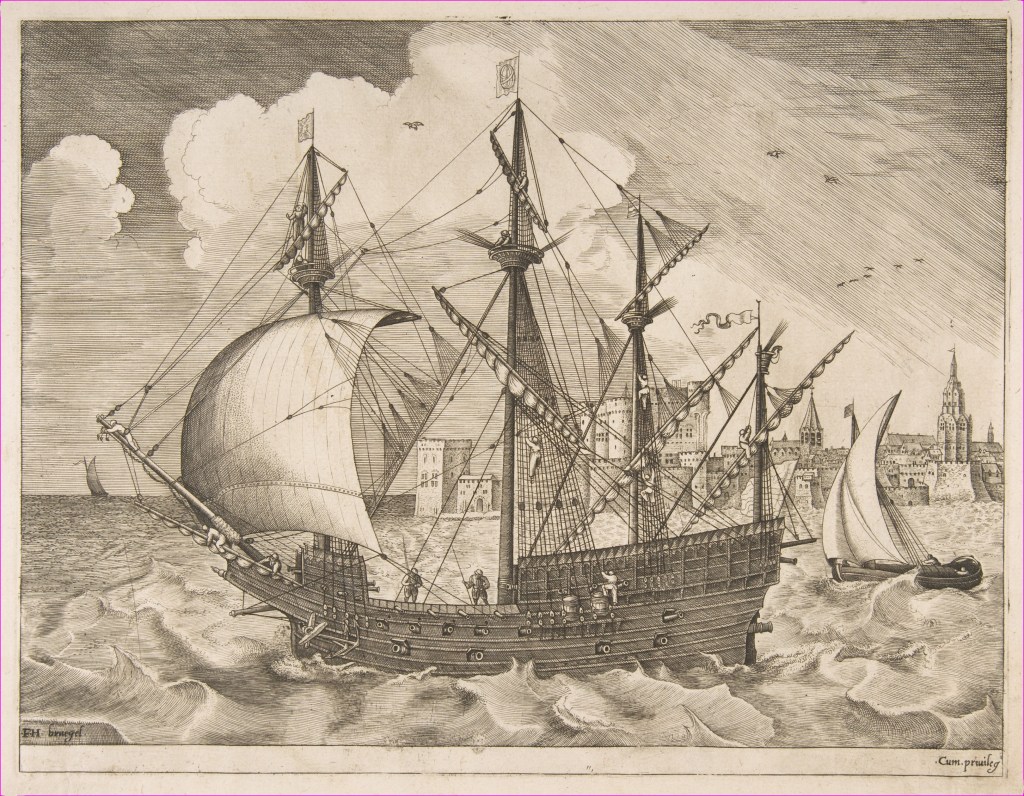
The Ribeira Grande itself was used to construct and dock naus (or carracks) and galleons and housed several important buildings such as the Casa da Moeda (Royal Mint), Artilharia (Gun Foundry), Casa de Pólvora (Gunpowder Factory), Alfandega (Customs-House, later moved to Panjim), the Bangaçal (where cargo was stored), the Peso (where cargo was weighed) and finally the elephant stables. The private chapel of the Ribeira Grande was dedicated to the Cinco Chagas (Five Wounds) and in a corner of the Ribeira, on the eastern side was located the Church of Santos Mártires (Holy Martyrs).

Sadly, none of these grand buildings remain today, the only hint of any of them ever existing being a wall of the Casa de Pólvora and the dilapidated compound wall of the Ribeira Grande. José Nicolau da Fonseca, a traveller who visited Goa in 1878 had this to say about the state of the Quay of the Viceroys:
A luxuriant but lonely grove of palm trees stands now on the site of this once busy pier, which measured about seven hundred paces in length and two hundred in breadth.
The Importance of the Royal Dockyard
The Ribeira Grande was central to the Portuguese colonial expansion in the East because not only did it meet their defence and naval requirements but also their civil requirements. The shipyard not only excelled in constructing masterful ships and cannons fit for war, but also standardized a system of administration where every worker had a responsibility, and the yard behaved as a self-governing entity which in-turn led to efficiency in the construction process.

Marques de Pombal, during his swathe of changes after coming into power in 1773, divided the administration of the yard into several posts – the Intendant-General, Treasurer, Executor, Writers, Auditors, Clerks, Chief-Master, Masters, Overseer, Guards and the Doorkeeper. Besides this, indigenous labour played a very crucial rule in the functioning of the dockyard. Carpenters and shipbuilders were employed from Panelim, Chimbel, Carambolim and neighboring villages, and the procuring of timber along with supplying of the tools was entrusted to the locals. Contracts were given to residents from the neighboring islands of Chorão and Divar for the timber and tools which were used to build the massive ships.
The Remains of the Ribeira

The dockyard continued to function all the way until the 19th century. In 1753, Marques de Tavora declared the area from Ribandar till the Ribeira as a protected zone after a fire broke out and burnt down several ships. In 1773, Marques de Pombal restructured the entire administrative and technical setup of the dockyard as mentioned before. This system continued until 1841, when it was once again reorganized by Lopes de Lima, giving it its final title of Arsenal da Marinha Exército e Ribeira das Naus na Cidade de Goa.

By the time of the move of the capital to Panjim in 1843, most of its functions had already shifted away to either Panjim or Mormugao. By 1878, it had already been in ruins for a long time. It laid in ruin for several decades until, in the true spirit of the cyclical nature of history, a new shipyard was set up on the same compound – the Dempo Shipyard of Old Goa. I would like to end this article with another quote from the 19th century traveller José Nicolau da Fonseca which sums up the life and death of the Ribeira,
There is nothing at present to show the once flourishing conditions of these places. Instead of the bustle that once prevailed here, a complete silence now reigns, broken only by the wind whistling through the branches of the palm-trees which grow luxuriantly on the spot.
José Nicolau da Fonseca on the state of the Ribeira Grande, 1878
Standing today in the spot where massive galleons once berthed, their cargoes stored and weighed, where monstrous seafaring vessels were brought to life piece by piece, standing here brings not only a sense of wonder and humility, it also serves to remind us of the common Goan man that toiled day and night, upon whose shoulders rested the fate of the once-mighty Empires, and upon whom we still depend to this day.
Sources / Further Reading:
- “Portuguese Shipping and Shipbuilding in Goa, 1510-1780”, Xavier M. Martins
- “An Historical and Archaeological Sketch of the City of Goa”, José Nicolau da Fonseca
- “Probable source of rocks for millstones and cannon balls of Goa, India”, Abhijit S. Ambekar et. al.
- “History of the Portuguese Navigation in India, 1497-1600”, K. M. Mathew
- “Nakhudas and Nauvittakas: Ship-Owning Merchants in the West Coast of India (C. AD 1000-1500)”, Ranabir Chakravarti
- “The Kadamba Kula: A History of Ancient and Mediaeval Karnataka”, George M. Moraes
- “The World’s Oldest Dock at Lothal”, Kaushik Patowary – AmusingPlanet
- “A Possible Identification of Meluḫḫa, Dilmun and Makan”, Romila Thappar
- “Neanderthals: The First Sailors?”, Stefan Milo
 História de Goa